
SEO vs AEO vs GEO: A Simple Guide to Ranking on Google and Getting Recommended by AI Search
Search behaviour is changing. Earlier, people searched Google, clicked a website, and found the information they needed. Today, they also ask ChatGPT, Google AI Overviews, Perplexity, and other AI-powered platforms for direct answers and recommendations.
This shift has introduced three important digital marketing strategies: SEO (Search Engine Optimization), AEO (Answer Engine Optimization), and GEO (Generative Engine Optimization).
Although these terms are closely connected, each has a different purpose.
Imagine you own a small bakery in Vadakara, Kerala. You want more customers to discover your bakery online. How can SEO, AEO, and GEO help your business?
Let’s understand each strategy through this simple example.
What Is SEO (Search Engine Optimization)?
SEO stands for Search Engine Optimization. It is the process of improving your website’s visibility in search engine results, especially Google, so that potential customers can discover your business.
For a bakery owner in Vadakara, SEO means making sure the bakery appears when someone searches for:
- Best bakery in Vadakara
- Birthday cake shops near me
- Best chocolate cake in Vadakara
- Fresh cakes and pastries in Vadakara
- Bakery with home delivery near me
How Does SEO Work?
SEO generally focuses on three major areas:
1. On-Page SEO
Optimizing website content, headings, keywords, images, page titles, meta descriptions, and internal links.
For example, your bakery website could have a page titled “Best Birthday Cakes in Vadakara” with detailed information about available cakes, flavours, pricing, and ordering options.
2. Off-Page SEO
Building your website’s authority through relevant backlinks, brand mentions, business listings, and genuine customer references.
For example, getting your bakery featured in a local food blog or Vadakara business directory can improve your online visibility.
3. Technical SEO
Making sure your website is technically accessible to search engines.
Important factors include:
- Website loading speed
- Mobile-friendly design
- HTTPS security
- XML sitemap
- Proper indexing
- Structured data and schema markup
The Goal of SEO: Get your bakery website to appear prominently in Google’s search results and attract relevant website visitors.
What Is AEO (Answer Engine Optimization)?
AEO stands for Answer Engine Optimization. It focuses on making your content easy for search engines and answer engines to understand, extract, and present as a direct answer to a user’s question.
Unlike traditional SEO, which primarily aims to improve search rankings, AEO focuses on getting your content selected as an answer.
Imagine someone searches:
“What is the best birthday cake shop in Vadakara?”
Instead of simply showing a list of websites, Google may display a featured answer, AI-generated summary, or other direct information.
Your content should be structured to answer such questions clearly.
How Does AEO Work?
1. Use Question-Based Headings
Create content around the actual questions your potential customers ask.
Examples:
- Which bakery sells the best birthday cakes in Vadakara?
- How much does a customised birthday cake cost?
- Where can I order fresh chocolate cakes in Vadakara?
- Does the bakery offer same-day cake delivery?
2. Provide Direct Answers
Place a clear and useful answer immediately below the relevant question heading.
For example:
Which bakery offers customised birthday cakes in Vadakara?
A bakery offering customised birthday cakes in Vadakara should provide different flavours, designs, sizes, and personalisation options. Customers should be able to explore available designs, check prices, and place orders through the bakery’s website or contact number.
Keep answers concise, accurate, and helpful. A 40–60-word answer can be a useful editorial format, but it is not a mandatory Google ranking rule.
3. Organise Content Properly
Use:
- Clear H2 and H3 headings
- Frequently asked questions
- Numbered steps
- Bullet points
- Tables wherever useful
- Relevant schema markup
4. Build Trust and Authority
Provide accurate business information, genuine customer reviews, clear contact details, and updated content.
The Goal of AEO: Make your content easy for answer engines to understand and potentially select when responding to relevant questions.
What Is GEO (Generative Engine Optimization)?
GEO stands for Generative Engine Optimization. It focuses on improving the likelihood that your brand, website, products, or services will be discovered, referenced, and recommended in AI-generated responses.
AI-powered platforms such as ChatGPT, Perplexity, and Google’s AI search experiences are changing how people discover businesses.
Imagine someone asks ChatGPT:
“Can you recommend a good cake shop in Vadakara?”
Instead of displaying only traditional search results, an AI platform may generate a recommendation based on relevant information available across online sources.
Your objective is to make your bakery a credible and discoverable option.
How Does GEO Work?
1. Publish Useful and Detailed Content
Create content that answers real customer questions.
For example:
- Best birthday cakes in Vadakara
- How to choose the right cake for a birthday party
- Different types of customised cakes
- Chocolate cake versus red velvet cake
- Tips for ordering cakes online
Content should demonstrate actual knowledge rather than simply repeat keywords.
2. Strengthen Your Brand’s Online Presence
Make sure your bakery has consistent and accurate business information across relevant platforms.
Focus on:
- Your official website
- Google Business Profile
- Local business directories
- Relevant food and lifestyle publications
- Genuine customer reviews
- Social media profiles
3. Build Brand Mentions and Authority
AI systems may use information from multiple sources when generating responses.
Relevant brand mentions, credible references, expert content, and consistent business information can help establish your brand’s online presence.
4. Use Structured Data and Schema Markup
Schema markup helps search engines understand specific information about your business.
For a bakery, relevant structured data may include:
- LocalBusiness
- Bakery
- Organization
- Product
- Review, where eligible and accurately implemented
- FAQPage, where applicable
Structured data does not guarantee AI recommendations, but it can help machines interpret your website’s information.
5. Create Content That AI Can Understand
Write clear, factual, well-organised content.
Include:
- Specific business information
- Location-based details
- Product descriptions
- Frequently asked questions
- Authoritative references
- Relevant supporting evidence
The Goal of GEO: Improve your brand’s discoverability and credibility across generative AI search and recommendation experiences.
SEO vs AEO vs GEO: What Is the Difference?
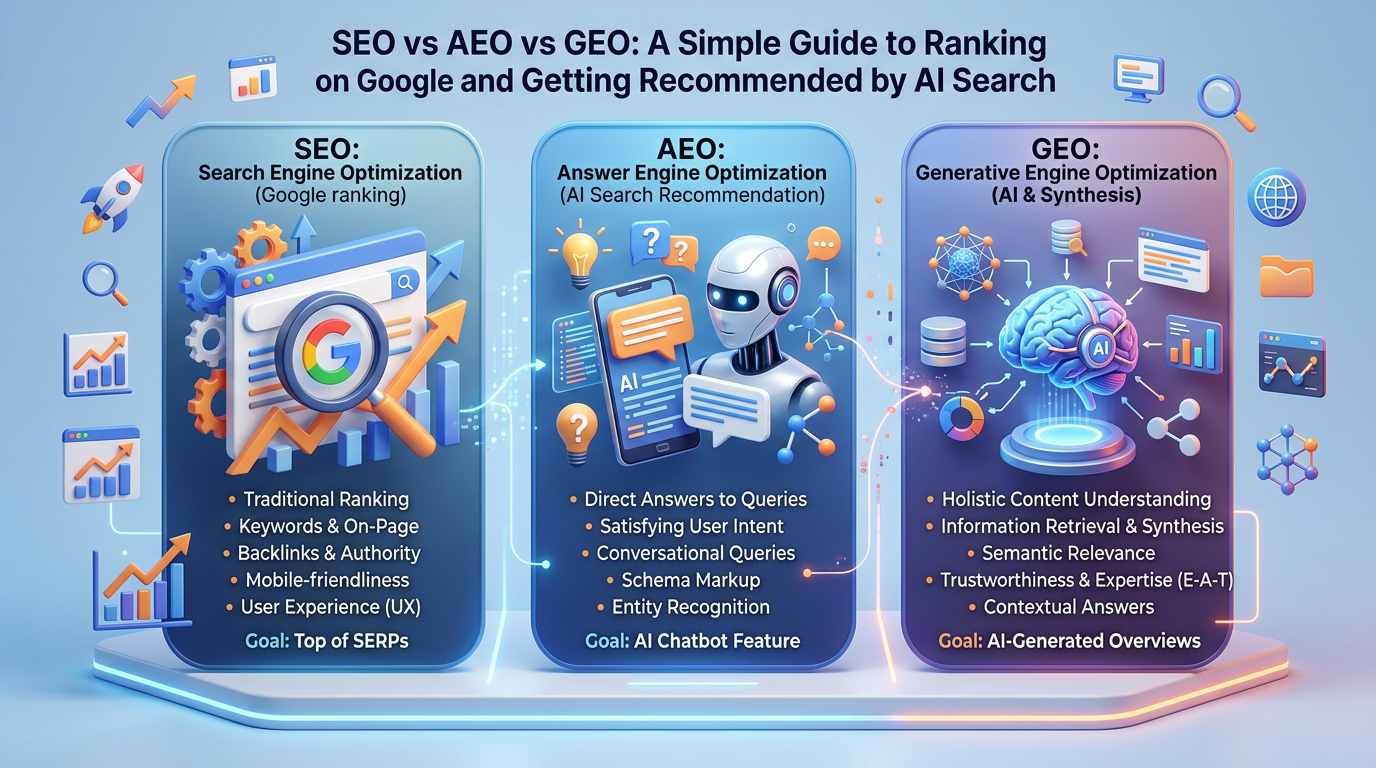
Although SEO, AEO, and GEO work together, their primary objectives are different.
| Feature | SEO | AEO | GEO |
|---|---|---|---|
| Full Form | Search Engine Optimization | Answer Engine Optimization | Generative Engine Optimization |
| Main Objective | Improve search visibility | Become a useful direct answer | Improve AI search visibility |
| Primary Focus | Search rankings | Answer extraction | AI-generated responses |
| Example Platform | Google Search | Google Featured Snippets and answer experiences | ChatGPT and Perplexity |
| Content Strategy | Keyword-focused, useful content | Question-and-answer content | Context-rich, credible content |
| Desired Outcome | Website traffic | Answer visibility | Brand mentions and recommendations |
How SEO, AEO, and GEO Work Together
These three strategies should not be treated as competing marketing techniques. They complement one another.
Let’s return to our bakery example.
SEO: Bring Customers to Your Website
Someone searches “Best bakery in Vadakara” on Google.
Your bakery website appears among the search results.
The customer discovers your website and explores your products.
AEO: Get Your Content Featured as an Answer
Someone searches “Where can I buy customised birthday cakes in Vadakara?”
Your website contains a clearly structured answer explaining your cake options, customisation services, and ordering process.
Search engines may select this information for a relevant answer experience.
GEO: Get Your Brand Recommended by AI
Someone asks ChatGPT, “Suggest a reliable bakery in Vadakara for a customised birthday cake.”
Your bakery has accurate business information, useful website content, relevant brand mentions, and a credible online presence.
These signals may help AI platforms discover and consider your bakery when generating relevant recommendations.
Remember, none of these strategies guarantees a particular ranking, featured answer, or AI recommendation.
7 Practical Strategies to Improve Your SEO, AEO, and GEO Performance
If you want your business to perform well in traditional search and AI-powered discovery, start with these practical steps.
1. Identify the Right Search Keywords
Research what your target customers actually search for.
For example:
- Best bakery in Vadakara
- Birthday cake delivery Vadakara
- Customised cakes near me
- Affordable wedding cakes
- Best chocolate cake shop
Use a combination of location-based, product-based, and question-based keywords.
2. Create Helpful Website Content
Do not create website pages only to insert keywords.
Answer customer questions, explain your services, provide useful details, and make the information easy to understand.
3. Optimise Your Google Business Profile
For local businesses, an updated Google Business Profile is important.
Ensure that your profile includes:
- Correct business name
- Accurate address
- Updated contact number
- Business hours
- Relevant business category
- Product and service information
- Genuine customer reviews
- Recent photographs
4. Add Relevant Schema Markup
Implement structured data that accurately represents your business and its content.
Use appropriate schema types and validate the implementation using Google’s Rich Results Test and Schema.org Validator.
5. Build Quality Backlinks and Brand Mentions
Get your business mentioned on relevant, trustworthy websites.
Prioritise quality and relevance over the number of backlinks.
6. Optimise Your Website for Mobile Users
Most customers discover local businesses through mobile devices.
Make sure your website:
- Loads quickly
- Has easy navigation
- Displays contact information clearly
- Provides a smooth mobile experience
- Makes enquiries and orders simple
7. Monitor Your Search and AI Visibility
Track your performance regularly.
Useful metrics include:
- Google organic rankings
- Organic website traffic
- Search impressions and clicks
- Google Business Profile interactions
- Branded search volume
- Referral traffic from AI platforms
- Brand mentions in AI-generated responses
You can use Google Search Console, Google Analytics, and manual AI search testing to understand your visibility.
Common Mistakes to Avoid in SEO, AEO, and GEO
Many businesses invest in digital marketing but overlook important factors that influence search visibility.
Avoid these mistakes:
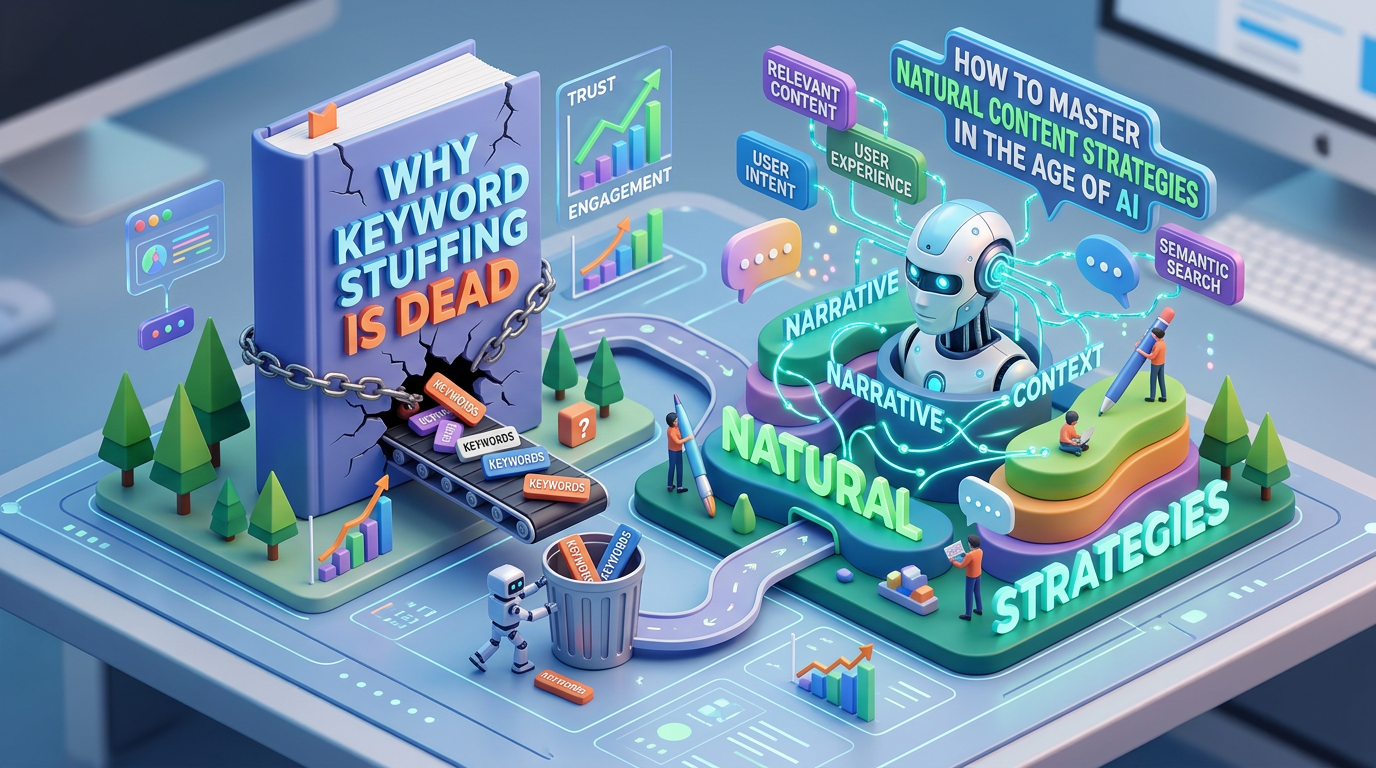
- Keyword stuffing: Repeating the same keyword unnaturally throughout your website.
- Thin content: Publishing pages that provide little practical value.
- Duplicate content: Copying information from other websites without adding original insights.
- Ignoring local SEO: Failing to maintain accurate business information.
- Missing structured data: Not providing appropriate machine-readable context.
- Unverified claims: Publishing exaggerated or misleading information.
- Ignoring mobile optimisation: Providing a poor experience for mobile visitors.
- Expecting instant AI rankings: Assuming that publishing content guarantees ChatGPT or Perplexity recommendations.
The best approach is to build a credible digital presence with useful information, technical accuracy, and consistent optimisation.
Frequently Asked Questions (FAQs)
1. What is the difference between SEO, AEO, and GEO?
SEO focuses on improving website visibility in search engine results. AEO focuses on making content suitable for direct answers. GEO focuses on improving brand and content visibility in AI-generated responses. All three strategies help businesses improve online discoverability.
2. Is GEO replacing traditional SEO?
No. GEO is not replacing SEO. Traditional SEO remains important for search engine discovery, indexing, website authority, and organic traffic. GEO extends optimisation efforts towards AI-powered search and recommendation experiences.
3. How can my business appear in ChatGPT recommendations?
Build a credible online presence with useful website content, accurate business information, relevant third-party mentions, and authoritative references. Make your content easy to understand and ensure your business details are consistent. However, no SEO or GEO technique guarantees a ChatGPT recommendation.
4. Does AEO help websites appear in Google AI Overviews?
Well-structured, relevant, and helpful content can improve its suitability for search features that provide direct answers. However, Google does not guarantee inclusion in AI Overviews based on a particular content format or word count.
5. Is schema markup important for GEO?
Schema markup can help search engines understand the entities, services, products, and information on a website. It is a useful part of technical SEO, although implementing schema alone does not guarantee AI citations or recommendations.
6. Can small businesses benefit from GEO?
Yes. Local businesses such as bakeries, restaurants, consultants, clinics, and service providers can benefit from building a strong digital presence. Useful local content, accurate business information, and credible online references can improve discoverability.
7. How long does SEO, AEO, and GEO take to show results?
There is no fixed timeline. Results depend on website quality, competition, industry, content relevance, technical health, brand authority, and search platform behaviour. SEO improvements may take weeks or months, while AI visibility can vary considerably.
Conclusion: Your Business Needs SEO, AEO, and GEO
The way customers discover businesses is evolving.
Ranking on Google is still important, but businesses should also consider how their content appears in direct answers and AI-generated recommendations.
Think of it this way:
- SEO helps customers find you.
- AEO helps your content become an answer.
- GEO helps AI platforms discover and potentially recommend your brand.
Whether you run a bakery, a startup, a consulting firm, an e-commerce store, or a local service business, building visibility across traditional search engines and AI-powered platforms is becoming an important part of digital marketing.
Don’t optimise your website only for search engine rankings. Build a digital presence that people and AI-powered platforms can understand, trust, and discover.
Want to improve your business visibility on Google, ChatGPT, and other AI search platforms?
Explore AI-powered SEO strategies, content optimisation, technical SEO, schema markup, and Generative Engine Optimization to strengthen your online presence.

Leave a Reply