
Google AI Overviews: Why Your Website Content Must Adapt in 2026
Google Search is evolving rapidly. Traditional search results, where users click website links to find information, are increasingly accompanied by AI-generated summaries known as Google AI Overviews.
This change is transforming how people discover information online and how businesses attract visitors through search engines.
For website owners, bloggers, digital marketers, and businesses, this creates an important challenge: Is your website content ready for AI-powered search?
Simply publishing blogs and targeting keywords may no longer be enough. Websites must create useful, structured, trustworthy, and question-focused content that helps search engines understand and present information effectively.
Let’s explore what Google AI Overviews mean for SEO and how your website can adapt.
What Are Google AI Overviews?
Google AI Overviews are AI-generated summaries that appear within Google Search results to help users understand a topic quickly.
Instead of displaying only a list of website links, Google can generate a summary using information from multiple sources and provide links to relevant websites for further reading.
For example, when someone searches for:
- How does GST registration work?
- What are the benefits of registering a private limited company?
- How can small businesses improve their SEO?
- What are the tax implications of selling property in India?
Google may display an AI-generated overview before traditional organic search results.
This changes how users interact with search results and creates new opportunities for websites that publish relevant and reliable information.
Why Google AI Overviews Are Changing SEO
Traditional SEO primarily focused on ranking website pages higher in search results to attract organic clicks.
With AI Overviews, users may find answers directly on the search results page without visiting multiple websites.
This can affect website traffic, particularly for informational searches where users only need a quick answer.
However, AI-powered search also creates opportunities for businesses whose content is useful enough to be referenced through relevant links.
Key changes include:
- More AI-generated answers: Users can find information without opening multiple websites.
- Changing click behaviour: Some informational searches may generate fewer traditional organic clicks.
- Greater importance of content quality: Clear, useful, and reliable information becomes increasingly important.
- Question-based search: Content addressing specific user questions can help search engines understand its relevance.
- New visibility opportunities: Websites can potentially receive exposure through links featured in AI-generated answers.
Why Your Website Content Must Adapt
If your website still relies entirely on traditional keyword-based content, it may miss opportunities in the evolving search environment.
Adapting your content strategy does not mean abandoning traditional SEO. It means strengthening it to serve both human readers and AI-powered search experiences.
1. Create Question-Based Content
People increasingly use conversational and detailed queries when searching for information.
Instead of targeting only broad keywords, identify the actual questions your potential customers are asking.
For example:
Traditional keyword: GST Registration
Question-based content:
- Who needs GST registration in India?
- What documents are required for GST registration?
- How long does GST registration take?
- Can a business operate without GST registration?
Include clear answers to relevant questions throughout your website content.
2. Provide Direct and Meaningful Answers
Avoid unnecessary introductions before addressing the reader’s question.
Structure your content so that important questions receive clear and concise answers.
For example:
Question: What is GST registration?
GST registration is the process through which an eligible business obtains a Goods and Services Tax Identification Number (GSTIN), allowing it to comply with applicable GST requirements in India.
After providing the direct answer, explain the topic in greater detail.
This approach improves readability and helps search engines understand the relationship between questions and answers.
3. Organise Content with Proper Heading Structures
A well-organised website makes information easier to understand.
Use a logical heading hierarchy:
- H1 for the primary page title.
- H2 for major content sections.
- H3 for supporting topics.
- H4 and H5 for deeper subtopics where necessary.
Break lengthy content into meaningful sections and use descriptive headings.
Avoid placing multiple unrelated topics under one heading.
4. Focus on E-E-A-T and Content Credibility
Google’s content evaluation systems emphasise experience, expertise, authoritativeness, and trustworthiness (E-E-A-T).
This is particularly important for websites publishing information about finance, taxation, healthcare, legal matters, and other subjects that can significantly affect people’s lives.
Strengthen content credibility by:
- Publishing expert-reviewed information.
- Including relevant author credentials.
- Using reliable and authoritative references.
- Updating outdated information.
- Providing practical examples and real-world insights.
- Maintaining accurate business and contact information.
Do not publish generic AI-generated articles without checking their accuracy and usefulness.
5. Improve Website Technical SEO
Quality content alone cannot compensate for a poorly structured website.
Technical SEO helps search engines discover, crawl, and understand your pages.
Important areas to review include:
- Website loading speed and Core Web Vitals.
- Mobile responsiveness.
- Proper indexing and crawlability.
- XML sitemap configuration.
- Internal linking structure.
- Canonical tags.
- Structured data and schema markup.
- Secure HTTPS connections.
Ensure that important content is accessible in a crawlable format rather than being hidden behind unnecessary technical barriers.
6. Implement Relevant Schema Markup
Structured data helps search engines understand the information available on your website.
Depending on the content, relevant schema types may include:
- Article Schema
- Organization Schema
- LocalBusiness Schema
- BreadcrumbList Schema
- Product Schema
- Service Schema
Implement schema accurately and ensure that the structured data reflects the visible content on the page.
Remember that schema markup does not guarantee inclusion in Google AI Overviews. It supports content understanding and eligibility for certain search features.
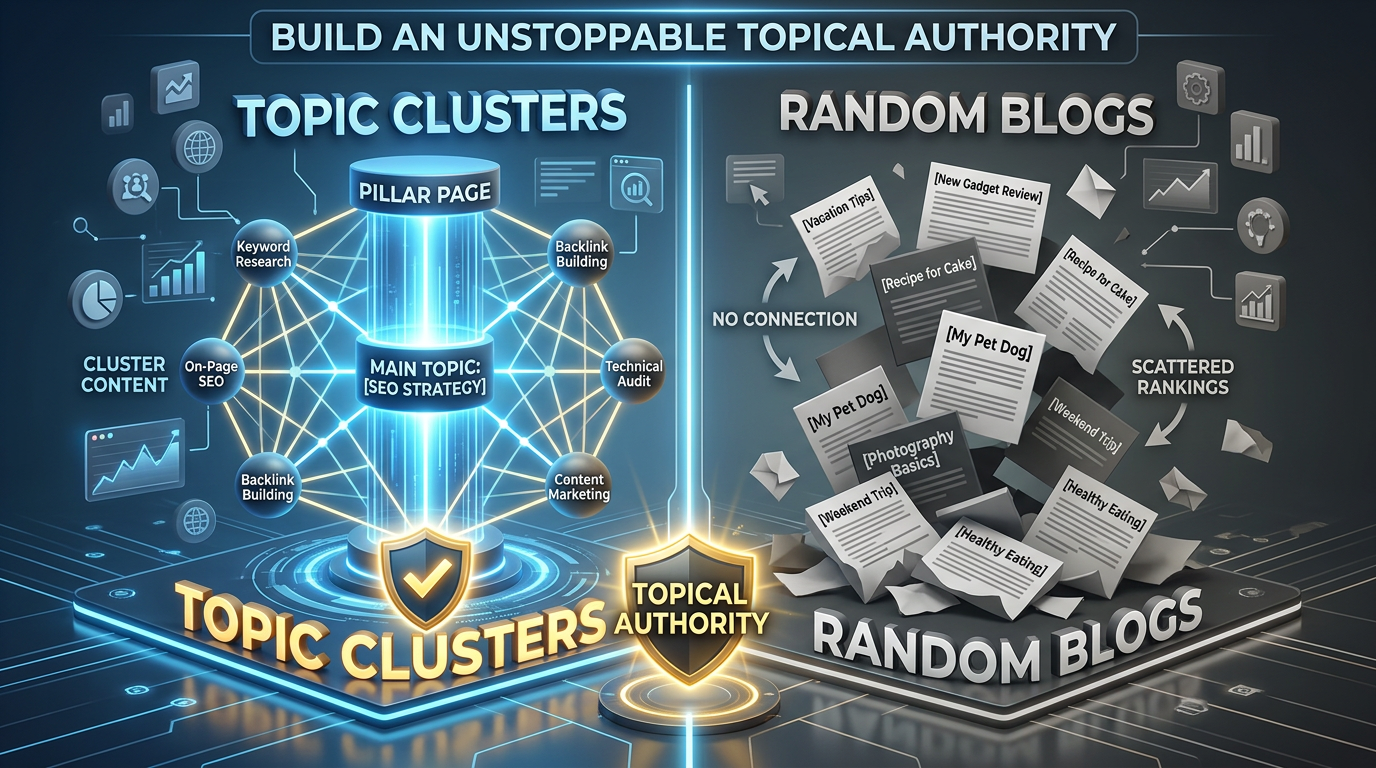
7. Build Strong Internal Linking
Internal links connect related pages within your website.
For example, a blog about GST registration can link to related articles covering:
- GST return filing.
- Input Tax Credit.
- GST compliance.
- GST notices and assessments.
- GST registration cancellation.
This creates a connected content structure and helps users discover additional relevant information.
Develop topic clusters instead of publishing unrelated blogs without a clear content strategy.
8. Keep Your Content Updated
Outdated information can reduce the usefulness and reliability of your website.
Review existing blogs regularly and update:
- Old statistics and figures.
- Changes in laws and regulations.
- Outdated examples.
- Broken external references.
- Incorrect screenshots or instructions.
- Previously published information that is no longer relevant.
For industries such as taxation, finance, and compliance, regular content reviews are particularly important.
Traditional SEO vs AI Search Optimisation
Understanding the difference between traditional SEO and AI-focused search optimisation helps businesses develop a more effective content strategy.
| Traditional SEO | AI Search Optimisation |
|---|---|
| Focuses on keyword rankings | Focuses on relevant answers and context |
| Targets search engine result pages | Targets visibility across AI-powered search experiences |
| Emphasises backlinks and authority | Emphasises authority, clarity and useful information |
| Often targets individual keywords | Covers related questions and topics |
| Measures organic clicks and rankings | Also considers AI visibility and referral traffic |
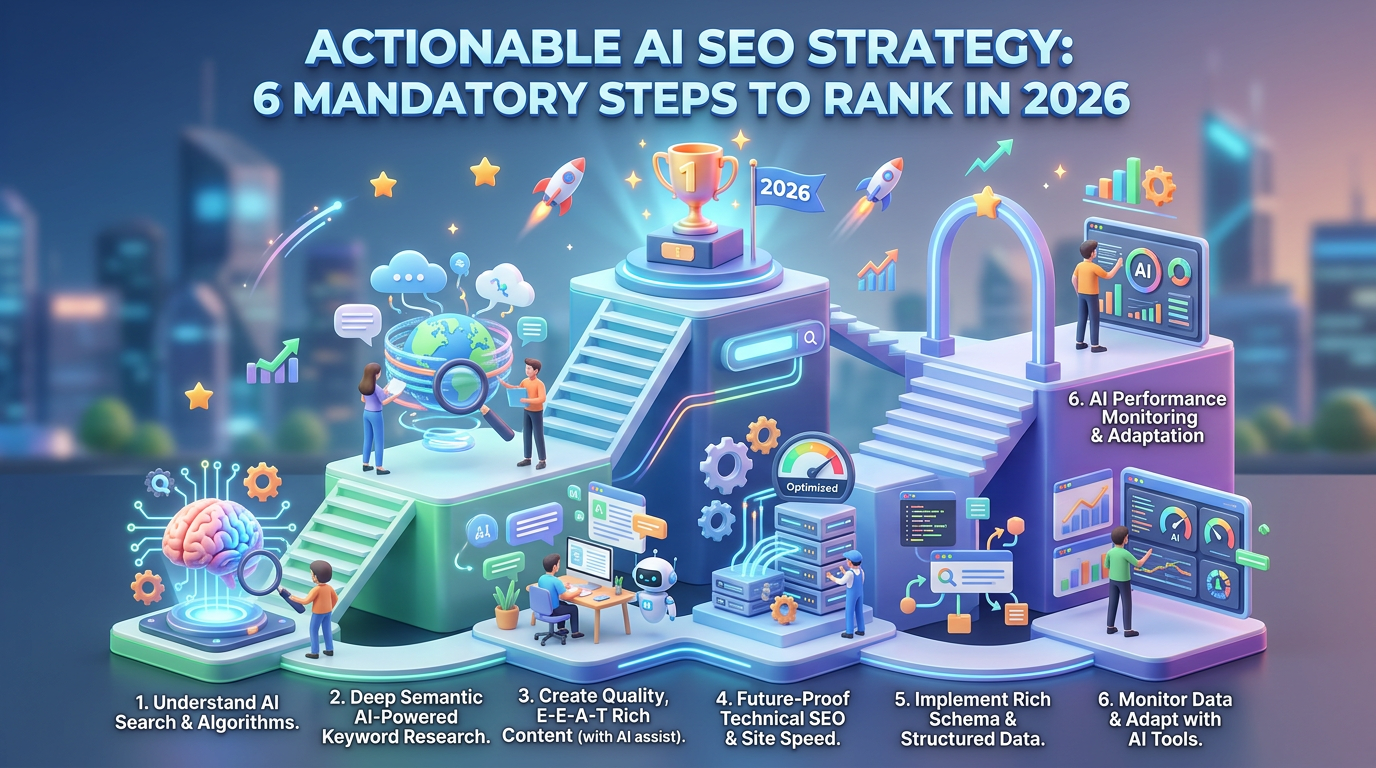
These approaches are not competitors. A successful website should build a strategy that supports both traditional organic search and emerging AI-powered discovery.
How to Measure Your Website’s Performance in the AI Search Era
As search behaviour changes, businesses should evaluate more than just keyword rankings.
Monitor the following metrics:
1. Organic Search Traffic
Use Google Analytics 4 to understand how much traffic your website receives from organic search.
2. Search Impressions and Clicks
Google Search Console helps you monitor search impressions, clicks, click-through rates, and average positions.
3. Search Query Performance
Identify which questions and keywords bring visitors to your website.
4. Referral Traffic
Monitor visitors arriving from AI-powered platforms and other external sources where referral data is available.
5. Conversions and Leads
Ultimately, website performance should be measured by enquiries, registrations, purchases, and other meaningful business outcomes.
Do not evaluate your SEO performance using traffic numbers alone.
Common SEO Mistakes Businesses Should Avoid
While adapting to AI-powered search, avoid these common mistakes:
- Publishing large volumes of generic AI-generated content.
- Stuffing keywords into every paragraph.
- Ignoring search intent.
- Creating blogs without answering the main question.
- Using misleading or unsupported information.
- Ignoring technical SEO.
- Publishing duplicate or repetitive articles.
- Neglecting internal linking.
- Assuming schema markup guarantees AI Overview visibility.
- Chasing AI visibility without considering actual business conversions.
The objective should be to create content that genuinely helps users rather than simply attempting to manipulate search algorithms.
Practical Website Content Adaptation Checklist
Use this checklist to evaluate whether your website is prepared for the evolving search environment.
- Identify important customer questions and search queries.
- Create useful question-based content.
- Provide direct answers to relevant questions.
- Organise content with clear heading structures.
- Include expert insights and reliable references.
- Implement relevant structured data.
- Strengthen internal linking.
- Improve mobile usability and page speed.
- Update outdated website content.
- Monitor performance through Google Search Console and Google Analytics.
What Does the Future of SEO Look Like?
SEO is not disappearing. It is evolving.
Search engines are becoming more conversational, contextual, and AI-driven. Businesses can no longer depend entirely on publishing keyword-focused articles and waiting for organic traffic.
The future of SEO will increasingly involve a combination of:
- High-quality content creation.
- Topical authority.
- Technical SEO.
- User-focused content experiences.
- Structured data.
- Brand credibility.
- AI search visibility.
- Consistent content optimisation.
Businesses that adapt their websites to changing search behaviour will be better positioned to compete in the evolving digital landscape.
Conclusion: Don’t Let Your Website Fall Behind
Google AI Overviews represent an important shift in how information is discovered online.
Your website needs more than just keywords and regular blog publishing. It needs clear answers, reliable information, well-organised content, strong technical foundations, and a strategy built around what your audience actually wants to know.
The question is no longer just whether your website ranks on Google. It is whether your content remains useful and discoverable in an AI-powered search environment.
At GotMeNow, we help businesses strengthen their digital presence through AI-powered SEO strategies, content optimisation, topical authority, and intelligent website optimisation.
Prepare your website for the next generation of search.
Visit gotmenow.com to explore how AI-powered SEO can help your business grow.
Frequently Asked Questions (FAQs)
1. What are Google AI Overviews?
Google AI Overviews are AI-generated summaries displayed in Google Search results to provide users with quick answers and links to relevant sources.
2. Do Google AI Overviews affect website traffic?
Yes. AI Overviews can change user click behaviour, potentially reducing clicks for some informational searches while creating additional visibility opportunities for cited websites.
3. How can my website appear in Google AI Overviews?
Focus on helpful, accurate, original content, clear answers, strong technical SEO, and website credibility. There is no guaranteed method to secure inclusion.
4. Is traditional SEO still important in 2026?
Yes. Traditional SEO practices, including keyword research, technical optimisation, quality backlinks, internal linking, and useful content, remain important.
5. Does FAQ schema help websites appear in AI Overviews?
FAQ schema can help search engines understand page content, but implementing it does not guarantee AI Overview inclusion or special search visibility.
6. Should businesses use AI to create SEO content?
AI can support research, content planning, outlining, and optimisation. However, human expertise, fact-checking, originality, and editorial review remain essential.
7. How often should website content be updated?
Review content regularly based on industry changes, search performance, and accuracy. Tax, finance, legal, and compliance content may require more frequent reviews.
8. What is the difference between SEO and GEO?
SEO focuses on improving visibility in search engine results, while Generative Engine Optimisation (GEO) focuses on improving content visibility and representation across generative AI search experiences. Both can complement each other.

Leave a Reply