
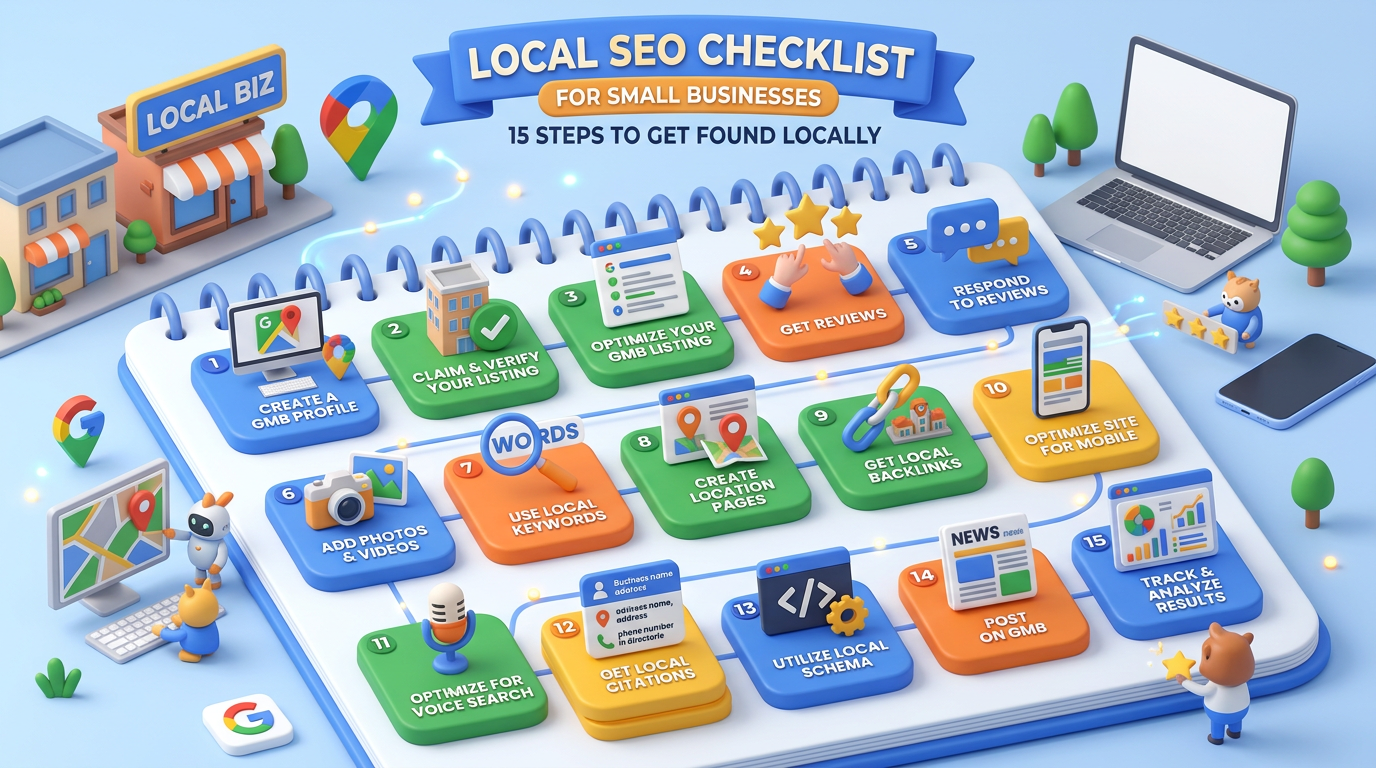
Local SEO Checklist for Small Businesses: 15 Steps to Get Found Locally
Why Local SEO Matters for Small Businesses
When someone searches “best bakery near me,” “accountant in Bangalore,” or “plumber near me,” they usually want a business they can contact or visit quickly.
That is where local SEO comes in.
Local SEO helps your business appear in location-based Google searches, Google Maps, and local search results. For small businesses competing against larger brands, a strong local SEO strategy can be one of the most cost-effective ways to attract nearby customers.
But where should you start?
Use this checklist to make sure your business has the essential local SEO foundations in place.
Local SEO Checklist
1. Create and Claim Your Google Business Profile
Your Google Business Profile (GBP) is one of the most important assets for local search.
Make sure your profile is claimed and verified, then provide accurate information such as:
- Business name
- Address
- Phone number
- Website
- Business hours
- Business category
- Services
- Business description
Keep the information consistent with your website and other online listings.
2. Choose the Right Primary Business Category
Your primary category tells Google what your business mainly does.
For example, a company offering accounting services should select the category that most accurately represents its core service rather than choosing a broad or unrelated category.
You can also add relevant secondary categories when appropriate.
Tip: Don’t select categories simply because they seem popular. Choose categories that genuinely describe your business.
3. Optimize Your Business Description
Write a clear, customer-focused business description.
Naturally mention:
- What your business offers
- Main services or products
- Areas you serve
- What makes your business different
Avoid stuffing the description with repetitive keywords. Write for humans first.
4. Keep Your NAP Information Consistent
NAP stands for:
Name + Address + Phone number
Your NAP details should be consistent across:
- Website
- Google Business Profile
- Business directories
- Social media profiles
- Industry websites
- Local listings
Even small inconsistencies can create confusion for customers and search engines.
5. Add Your Service Areas
If you serve customers across multiple locations, clearly communicate those service areas.
For example:
A digital marketing agency based in Kochi may serve businesses across Kochi, Thrissur, Ernakulam, and other parts of Kerala.
Don’t create fake locations simply to rank for more keywords. Your location targeting should reflect where you genuinely operate.
6. Optimize Your Website for Local Keywords
Your website should make it obvious where you operate and what you offer.
Instead of targeting only:
“digital marketing agency”
you could naturally target:
“digital marketing agency in Kochi”
Use relevant local keywords in:
- Page titles
- Meta descriptions
- Headings
- Service pages
- Body content
- Image alt text where appropriate
- URLs when natural
Avoid excessive keyword repetition.
7. Create Location-Specific Pages When Useful
If your business genuinely serves multiple locations, consider creating useful location pages.
For example:
- Digital Marketing Services in Kochi
- Digital Marketing Services in Thrissur
- Digital Marketing Services in Bangalore
Each page should contain unique, useful information about that location rather than simply replacing the city name on the same template.
8. Make Your Website Mobile-Friendly
Many local searches happen on smartphones.
A potential customer might find your business on Google and immediately visit your website. If the site loads slowly or is difficult to navigate on mobile, you could lose the lead.
Check that:
- Text is easy to read
- Buttons are easy to tap
- Pages load quickly
- Contact information is easy to find
- Forms work properly
- Navigation is simple
9. Add Your Business Contact Information Clearly
Don’t make customers search for your phone number or address.
Include important contact information where appropriate, such as:
- Header or navigation
- Contact page
- Footer
- Service pages
- Location pages
For businesses with physical locations, consider embedding a map and providing clear directions.
10. Get Genuine Customer Reviews
Reviews can strongly influence local customers.
Encourage satisfied customers to leave honest reviews about their experience.
A simple process can work well:
Complete the service → Ask for feedback → Provide your review link → Respond professionally
Never buy fake reviews or create misleading reviews. Focus on delivering a good customer experience that naturally generates positive feedback.
11. Respond to Reviews
Don’t just collect reviews—engage with them.
Thank customers for positive feedback and respond professionally to legitimate negative feedback.
For example:
“Thank you for sharing your experience. We appreciate your feedback and would be happy to discuss your concerns further.”
Thoughtful responses show potential customers that your business pays attention.
12. Build Relevant Local Citations
A local citation is an online mention of your business, often including its name, address, and phone number.
Look for reputable:
- Local business directories
- Industry directories
- Chamber of commerce websites
- Professional associations
- Local publications
Quality matters more than quantity. You don’t need to submit your business to hundreds of low-quality directories.
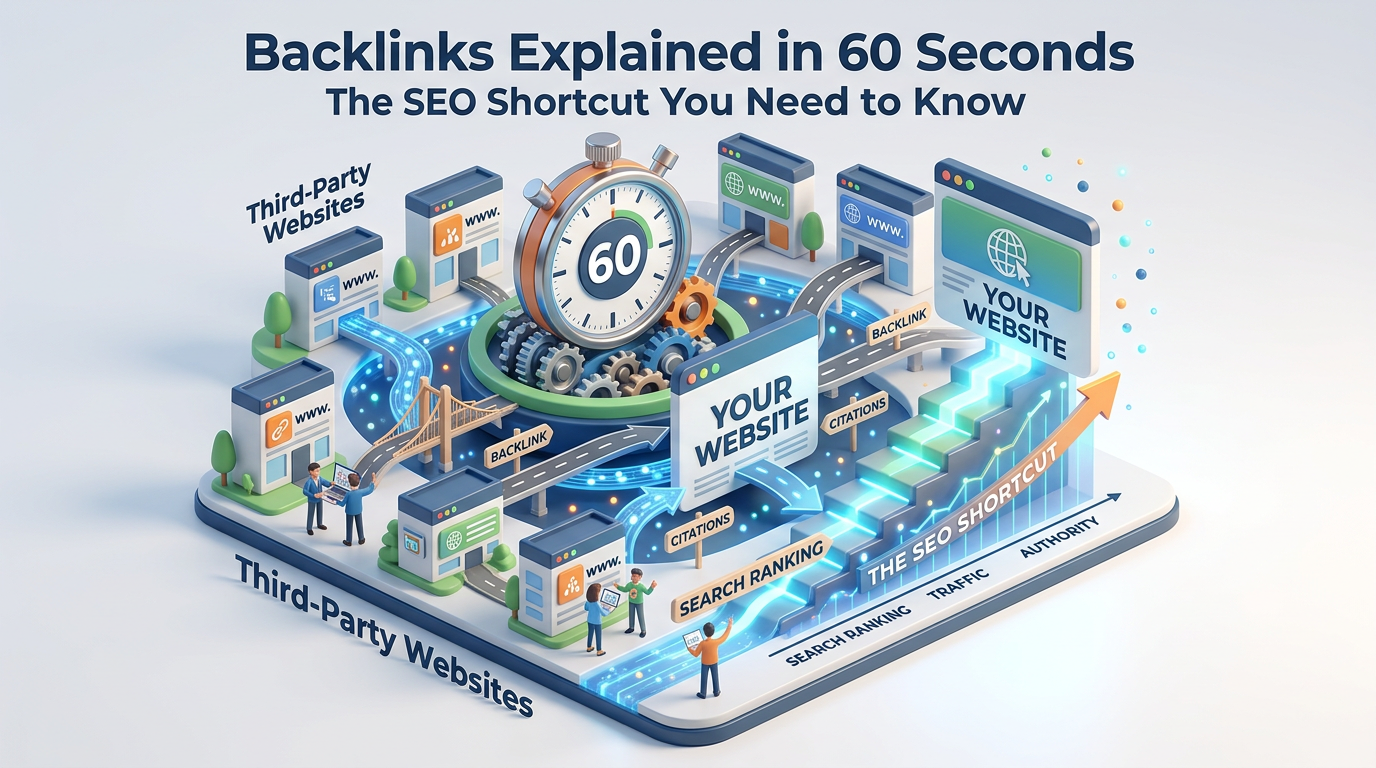
13. Earn Local Backlinks
Backlinks from relevant local websites can strengthen your online presence.
Potential opportunities include:
- Local news websites
- Community organizations
- Industry associations
- Local business partnerships
- Sponsorships
- Events
- Local blogs
For example, a local construction company sponsoring a community event might earn a legitimate mention and link from the event organizer’s website.
14. Add Local Business Schema
Structured data can help search engines understand important information about your business.
Depending on your business, relevant structured data may include details such as:
- Business name
- Address
- Phone number
- Opening hours
- Website
- Location
- Services
Schema isn’t a magic ranking shortcut, but it can help search engines interpret your business information more clearly.
15. Track Your Local SEO Performance
You can’t improve what you don’t measure.
Monitor metrics such as:
- Google Business Profile interactions
- Website organic traffic
- Local search visibility
- Phone calls
- Direction requests
- Contact form submissions
- Local keyword rankings
- Review growth
- Leads from organic search
Look for trends over time rather than expecting dramatic results overnight.
Quick Local SEO Checklist
Before you finish, make sure you’ve checked these boxes:
- ☑ Google Business Profile claimed and verified
- ☑ Accurate business category selected
- ☑ Business description optimized
- ☑ NAP information consistent
- ☑ Service areas clearly defined
- ☑ Website optimized for local keywords
- ☑ Useful location pages created where appropriate
- ☑ Website mobile-friendly
- ☑ Contact details clearly displayed
- ☑ Genuine customer reviews encouraged
- ☑ Reviews answered professionally
- ☑ Relevant local citations built
- ☑ Local backlinks earned
- ☑ Local business structured data implemented
- ☑ Local SEO performance tracked
Common Local SEO Mistakes to Avoid
Keyword Stuffing
Repeating the same city or keyword dozens of times doesn’t make a page more relevant.
Write naturally and focus on answering the customer’s search intent.
Creating Low-Quality Location Pages
Creating dozens of nearly identical pages for different cities can provide little value to users.
Only create location pages when you can provide genuinely useful, location-specific information.
Ignoring Reviews
Reviews are part of the customer decision-making process. Leaving questions and complaints unanswered can create a poor impression.
Inconsistent Business Information
A different phone number, address, or business name across websites can create unnecessary confusion.
Buying Fake Reviews or Links
Shortcuts can create long-term problems. Build your local presence through genuine customers, useful content, legitimate mentions, and real relationships.
How Long Does Local SEO Take to Work?
Local SEO isn’t an overnight strategy.
The timeline depends on factors such as:
- Competition in your area
- Your website’s authority
- Existing reviews
- Business category
- Location
- Quality of your optimization
- Strength of your local citations and backlinks
Some improvements may become visible relatively quickly, while meaningful organic growth can take several months.
The key is consistency.
Final Thoughts
Local SEO doesn’t have to be complicated.
For a small business, start with the fundamentals: optimize your Google Business Profile, keep business information consistent, improve your website, collect genuine reviews, create useful local content, and build relevant local authority.
Then measure your results and improve your strategy over time.
The goal isn’t simply to rank higher on Google. The real goal is to become easier for local customers to discover, trust, and contact.
If your business can consistently appear when potential customers are actively searching for what you offer, local SEO can become a powerful source of sustainable leads and growth.

Leave a Reply