
Backlinks Explained in 60 Seconds: The SEO Shortcut You Need to Know
What Is a Backlink?
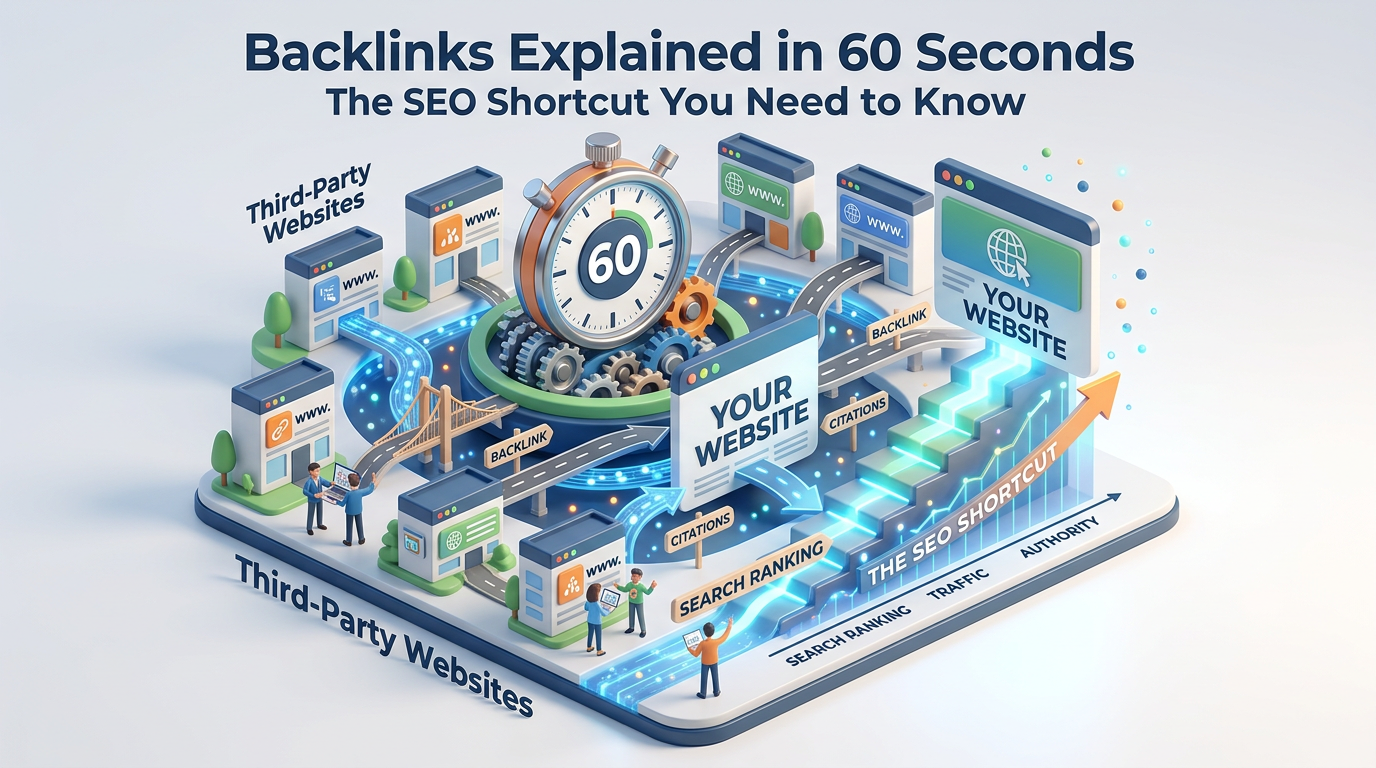
A backlink is a link from one website to another.
For example, imagine a popular marketing website publishes an article and links to your website as a useful resource. That link is a backlink for your website.
In simple terms:
Website A → links to → Website B
Website B has received a backlink from Website A.
Backlinks are also known as inbound links or incoming links.
Why Are Backlinks Important for SEO?
Search engines use links as one of the signals for understanding the authority and relevance of websites.
When reputable websites link to your content, it can indicate that your website provides useful or trustworthy information.
Quality backlinks can potentially help with:
- Improving search engine rankings
- Increasing website authority
- Driving referral traffic
- Helping search engines discover your pages
- Building credibility within your industry
But there is an important catch.
Not all backlinks are equal.
Quality Matters More Than Quantity
Getting 100 random backlinks isn’t necessarily better than getting 5 high-quality backlinks.
A backlink from a relevant, authoritative website can be much more valuable than numerous links from low-quality or unrelated websites.
For example, if you run a fitness website, a backlink from a respected health or fitness publication is generally more relevant than a link from an unrelated website.
Think:
5 relevant, high-quality backlinks > 100 low-quality backlinks
What Makes a Backlink Valuable?
Several factors can influence the value of a backlink:
1. Website Authority
A link from an established and trustworthy website can be more valuable than one from an unknown or low-quality site.
2. Relevance
The website linking to you should ideally be related to your industry, topic, or content.
3. Context
A naturally placed link within useful, relevant content is generally more meaningful than a random link placed on a page solely to manipulate rankings.
4. Link Attributes
Links can have attributes such as nofollow, sponsored, or UGC, which provide search engines with additional context about the relationship between the linking website and your site.
How Can You Get Backlinks?
Instead of trying to collect links everywhere, focus on creating reasons for other websites to reference your content.
Some practical strategies include:
- Create original research and statistics
- Publish useful guides and resources
- Write expert-led content
- Promote valuable content to relevant websites
- Build relationships with publishers and industry websites
- Contribute genuinely useful guest content where appropriate
- Create tools, templates, or resources people naturally want to reference
The goal is simple:
Create content worth linking to.
Avoid Buying or Spamming Backlinks
Trying to manipulate search rankings with spammy or artificial links can put your website at risk.
Avoid tactics such as:
- Buying large numbers of low-quality links
- Link farms
- Automated backlink generation
- Irrelevant directory spam
- Excessive link exchanges
- Creating links solely to manipulate rankings
SEO isn’t about having the most links.
It’s about earning the right links.
Backlinks in 60 Seconds: The Simple Formula
Remember this:
Great Content → Other Websites Reference It → Backlinks → Potential SEO Benefits
Backlinks are essentially votes of confidence from other websites, but relevance, quality, and context matter.
If you’re working on SEO, don’t obsess over the number of backlinks you have. Focus on building valuable content, earning genuine mentions, and developing authority in your niche.
Final Takeaway
Backlinks are links from other websites pointing to your website.
They can help search engines understand your site’s authority, relevance, and popularity—but quality matters far more than quantity.
So before asking, “How can I get 1,000 backlinks?”, ask a better question:
“What can I create that other websites will genuinely want to link to?”
That’s the foundation of a sustainable backlink strategy.

Leave a Reply