
Don’t Boost Posts! Do This Instead
Boosting a social media post can feel like the easiest way to get more reach.
You create a post, click “Boost,” choose a budget, select an audience, and wait for the engagement to roll in.
But here’s the problem: more reach does not always mean better results.
If your goal is to generate leads, increase sales, build a strong audience, or grow your business, simply boosting posts may not be the smartest use of your marketing budget.
Instead of putting money behind every post that performs well organically, you need a strategy that focuses on the right audience, the right objective, and the right conversion path.
Why Boosting Posts Isn’t Always the Best Strategy
A boosted post is primarily designed to give your existing content additional visibility.
That can be useful for awareness, but visibility alone doesn’t guarantee business results.
For example, imagine a post receives:
- 20,000 impressions
- 1,000 likes
- 100 comments
- 50 shares
Those numbers may look impressive.
But what if it generates only two enquiries and zero customers?
The post performed well from an engagement perspective, but poorly from a business perspective.
This is why marketers need to look beyond vanity metrics such as likes and impressions.
The Real Problem: Boosting for Engagement Instead of Outcomes
One of the biggest mistakes businesses make is spending money simply because a post is getting attention.
A better question is:
“What do I want this campaign to achieve?”
Your answer could be:
- Website traffic
- Lead generation
- Product sales
- App downloads
- WhatsApp enquiries
- Brand awareness
- Event registrations
- Email sign-ups
Once you identify the objective, you can build a campaign around that specific outcome instead of simply paying to show a post to more people.
Do This Instead: Run Objective-Based Ad Campaigns
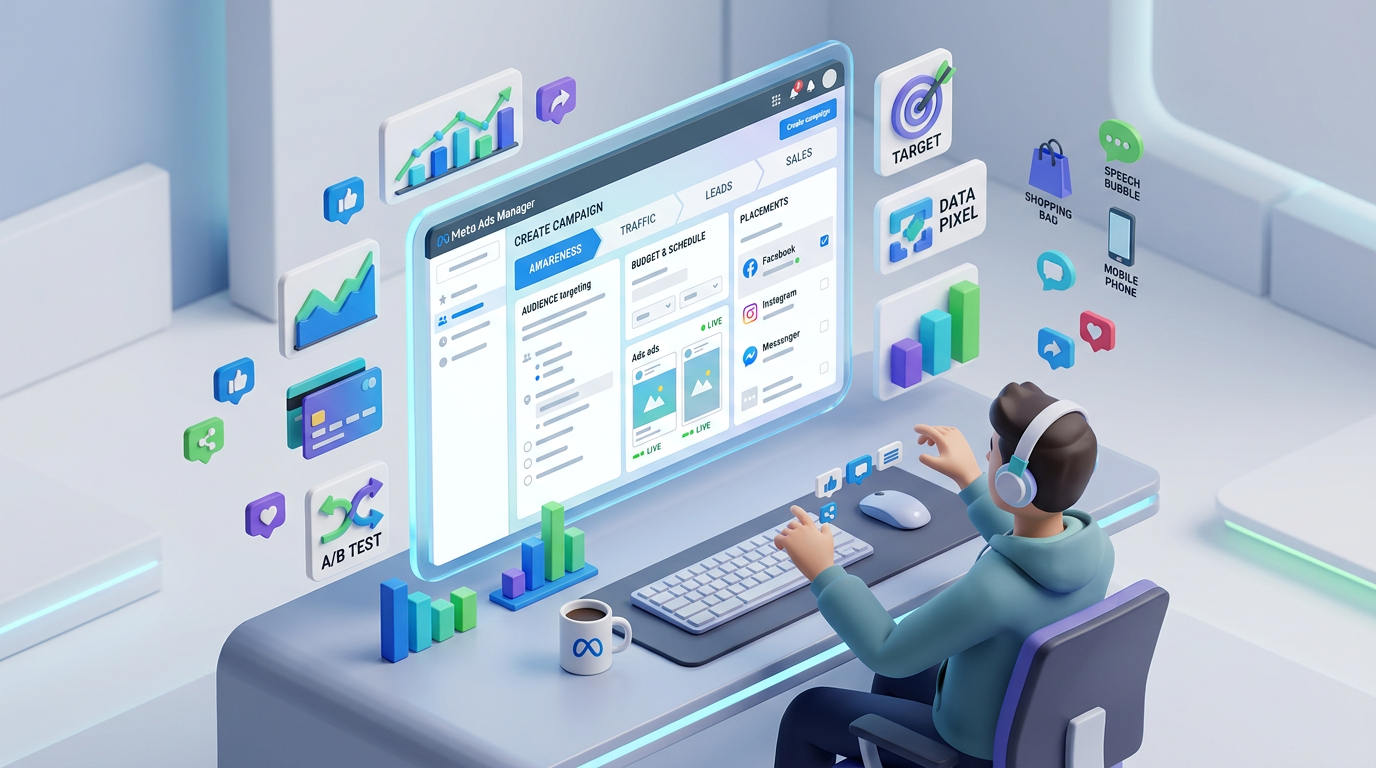
Instead of automatically boosting posts, use the platform’s advertising tools to create campaigns based on your actual marketing objective.
For example:
Goal: Generate leads
Create a dedicated lead-generation campaign with a clear offer, compelling creative, and a simple form.
Goal: Increase sales
Send users to a relevant product or landing page and optimize the campaign around conversions.
Goal: Drive website traffic
Use a strong call-to-action that takes users directly to the page where they can learn more or take action.
This approach gives your advertising a clear purpose.
Create Content for Different Stages of the Customer Journey
Not everyone who sees your content is ready to buy.
Some people are discovering your brand for the first time. Others are researching their options. A smaller group may already be ready to make a purchase.
Your content should reflect these different stages.
1. Awareness Content
Introduce the problem and educate your audience.
Examples:
- “5 Digital Marketing Mistakes Small Businesses Make”
- “Why Your Instagram Reach Is Falling”
- “How AI Is Changing Content Marketing”
The goal is to attract attention and build awareness.
2. Consideration Content
Help potential customers understand why your solution is valuable.
Examples:
- Case studies
- Tutorials
- Comparisons
- Customer testimonials
- Product demonstrations
The goal is to build trust.
3. Conversion Content
Give interested prospects a clear reason to take action.
Examples:
- Free consultation
- Product demo
- Limited-time offer
- Free trial
- Downloadable guide
The goal is to turn interest into action.
Test Your Creative Before Spending More Money
Instead of immediately putting a large budget behind one post, test different versions of your content.
Experiment with:
- Different headlines
- Images versus videos
- Short versus long copy
- Different calls-to-action
- Different audience segments
- Different offers
For example, one ad might say:
“Struggling to Generate Leads Online?”
Another could say:
“Get More Qualified Leads Without Increasing Your Marketing Budget.”
Both target a similar problem, but one may produce significantly better results.
Testing helps you discover what actually resonates with your audience.
Send People Somewhere Useful
Getting someone to click your ad is only the first step.
Where does that person go next?
If your ad promises a free consultation but sends visitors to a generic homepage, you may lose potential customers.
Instead, create a landing page that matches the message of the advertisement.
A good landing page should have:
- A clear headline
- A specific value proposition
- Relevant information
- Social proof or testimonials
- A strong call-to-action
- Minimal distractions
The journey should feel natural:
Ad → Landing Page → Action → Lead/Sale
Retarget People Who Already Showed Interest
Not everyone converts on their first interaction with your brand.
Someone might visit your website, watch your video, interact with your Instagram profile, or add a product to their cart without taking the final step.
This is where retargeting becomes valuable.
You can create campaigns for people who have already interacted with your business and show them relevant follow-up messages.
For example:
First interaction: Educational video
Second interaction: Customer testimonial
Third interaction: Special offer or consultation
Instead of constantly searching for new audiences, you can continue engaging with people who have already demonstrated interest.
Measure Business Metrics, Not Just Likes
Before judging whether a campaign is successful, look at metrics connected to your actual objective.
Important metrics can include:
- Cost per lead
- Conversion rate
- Return on ad spend (ROAS)
- Customer acquisition cost (CAC)
- Website conversion rate
- Revenue generated
- Qualified enquiries
A campaign generating 20 leads at ₹200 each may be more valuable than a campaign generating 100,000 impressions with no conversions.
Marketing performance should ultimately be connected to business outcomes.
When Boosting a Post Can Still Make Sense
This doesn’t mean boosting posts is always useless.
It can make sense when your primary objective is simple awareness or when you want to increase the visibility of particularly important content.
For example, you might promote:
- An important announcement
- A major event
- A brand milestone
- A high-performing educational post
- Community-focused content
The key is to understand why you’re promoting the post and what success looks like.
Don’t boost simply because the button is there.
A Smarter Digital Marketing Formula
Instead of:
Create Post → Boost Post → Hope for Results
Try:
Define Goal → Understand Audience → Create Content → Test → Run Targeted Campaign → Optimize → Retarget → Measure ROI
This approach takes more planning, but it gives your marketing budget a much better chance of producing meaningful results.
Final Thoughts
Boosting posts isn’t automatically bad. The real problem is boosting without a strategy.
If you’re spending money on social media advertising, don’t focus only on getting more views, likes, or followers.
Focus on what those people do next.
Build campaigns around clear objectives. Test different creatives. Use targeted audiences. Create relevant landing pages. Retarget interested users. Most importantly, measure the metrics that actually affect your business.
Don’t just pay for more reach. Build a system that turns attention into action.

Leave a Reply